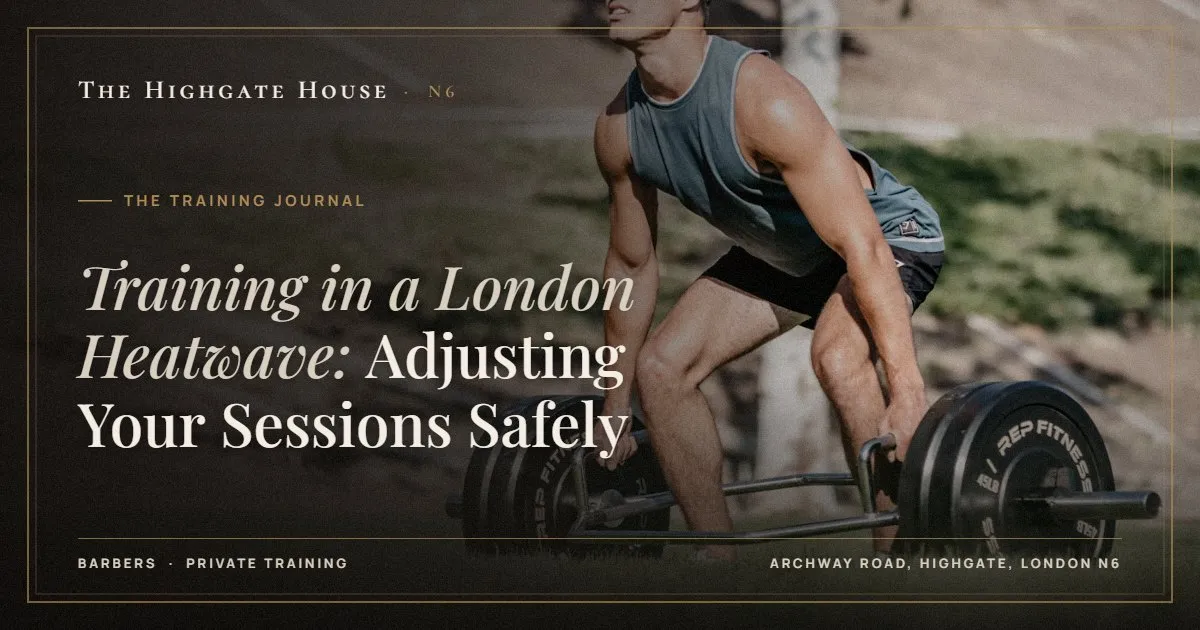
Training in a London Heatwave: Adjusting Your Sessions Safely
You can keep exercising in hot weather, but the session has to change. Train early in the morning or later in the evening rather than in the middle of the day, lower the intensity and expect your usual pace or weights to feel harder, take longer rests, and drink regularly before, during and after. Stop at once if you feel dizzy, sick, confused or develop a headache, and cool down in the shade. NHS advice during heatwaves is to avoid strenuous activity in the hottest part of the day, roughly 11am to 3pm. Heat is a real stressor on the body, so a hot-day session is about keeping the habit going, not setting records.
What heat does to a workout
When you exercise, your muscles produce heat and your body gets rid of it mainly by sweating and by sending more blood to the skin. In hot weather, especially when it is humid, both routes work less well. Your heart has to supply working muscles and the skin at the same time, so your heart rate climbs higher than usual for the same effort. Sweat losses rise, and if you do not replace the fluid, the effort feels harder still.
In practice this means three things. Your usual running pace will feel noticeably tougher. Endurance work suffers more than short, heavy lifting. And the line between “hard session” and “unwell” is closer than it is in October.
London heat is its own problem
London tends to be warmer than the surrounding countryside, because buildings and roads soak up heat during the day and release it at night. Evenings can stay warm, and many flats, particularly top floors, cool down slowly. That matters for training because poor sleep in a hot bedroom affects the next day’s session as much as the temperature outside. On days when the UK Health Security Agency issues heat-health alerts, take them seriously.
How to adjust your session
Timing
Early morning is usually the coolest, calmest window. Late evening is the next best, though in a long heatwave it may still be warm. Avoid the middle of the day for anything outdoors and strenuous.
Intensity
Train by effort, not by numbers. If you normally run at a certain pace, slow down until your breathing matches what that pace usually feels like. For strength work, keep the loads but drop a set, or stop a rep or two further from failure. Our guide to training when tired uses the same principle: adjust the dose, keep the habit.
Rest
Take longer between sets and intervals. A circuit that normally runs back-to-back can have a minute added between rounds without losing its value.
Duration
Shorter is fine. Thirty focused minutes in the heat is better than sixty minutes of struggle.
Location
Indoors, a cool, ventilated room is far more comfortable than direct sun. Outdoors, choose shaded routes. The tree cover on Hampstead Heath and in Highgate Wood is genuinely useful on hot mornings.
Hydration without overthinking it
- Arrive hydrated. Drink normally through the day before an evening session rather than gulping a litre beforehand.
- Sip during exercise rather than draining a bottle at the end.
- Pale straw-coloured urine is a simple guide that you are drinking enough; dark urine suggests you need more.
- For long, sweaty sessions, food after training replaces lost salt for most people. Sports drinks can help in long endurance events, but they are not needed for a typical hour in the gym.
- Do not overdo plain water either. Drinking very large amounts in a short time is not helpful.
Warning signs: when to stop
Heat exhaustion can come on during or after exercise. The NHS page on heat exhaustion and heatstroke lists the signs, which include:
- headache, dizziness or confusion
- feeling sick, or loss of appetite
- heavy sweating and pale, clammy skin
- cramps in the arms, legs or stomach
- fast breathing or pulse
- being very thirsty
If you notice these, stop, move somewhere cool, lie down with your feet slightly raised, drink water and cool your skin. The NHS advises that someone with heat exhaustion should start to feel better within about 30 minutes. If they do not, or if they become confused, stop sweating, lose consciousness or have a seizure, treat it as heatstroke, which is a medical emergency: call 999.
Who should take extra care
Older adults, people with heart or lung conditions, diabetes or kidney disease, people taking medication that affects heat or fluid balance, and anyone who is pregnant are more vulnerable in hot weather. If that is you, check with your GP first about whether and how to train during a heatwave, and lean towards gentle activity at the coolest time of day. The same applies if you are returning after illness or a long break.
A simple hot-day checklist
- Check the forecast and plan the session for the coolest window.
- Drink normally through the day beforehand.
- Wear light, loose, breathable clothing and a cap outdoors.
- Wear sun cream on exposed skin for outdoor sessions.
- Cut the session by a third, or lower the intensity.
- Take a bottle and use it.
- Know the warning signs and stop early if anything feels wrong.
- Cool down gradually, then eat and drink afterwards.
How I handle hot weeks with clients
During a heatwave I keep the structure of the programme but trim the volume, extend the rests and swap the hardest conditioning, usually the air bike intervals, for something steadier. Strength work continues because it suits the conditions better than long cardio. The studio offers early morning and evening sessions, which are the sensible times to train when the city is hot. If you would like help adjusting your training around the seasons, our 1-1 personal training in Highgate is built around exactly that kind of week-to-week judgement. For the opposite problem, see our guide to training outdoors in cold weather.
Questions we get asked
Do you burn more calories exercising in the heat?
Your heart rate is higher, but you will usually do less work, so it is not a useful fat-loss strategy. You lose water weight, which comes straight back when you drink.
Is it safe to lift weights in a heatwave?
For healthy adults, generally yes, with longer rests, plenty of fluid and a cool room. Stop if you feel unwell.
Should I train with a fan or open windows?
Moving air helps sweat evaporate and makes a big difference to comfort. Ventilate the room where you can.
Can I skip a week in a heatwave?
A few easier days will not undo months of work. If you prefer to keep going, our personal training page explains how sessions are planned around your schedule.
Book with The Highgate House
Ready to start training properly? Email us at [email protected] with the service and the day that suits you, and we will come back to you with times.
Visit The Highgate House · Private personal training
The Highgate House, Archway Road, Highgate, London N6.
