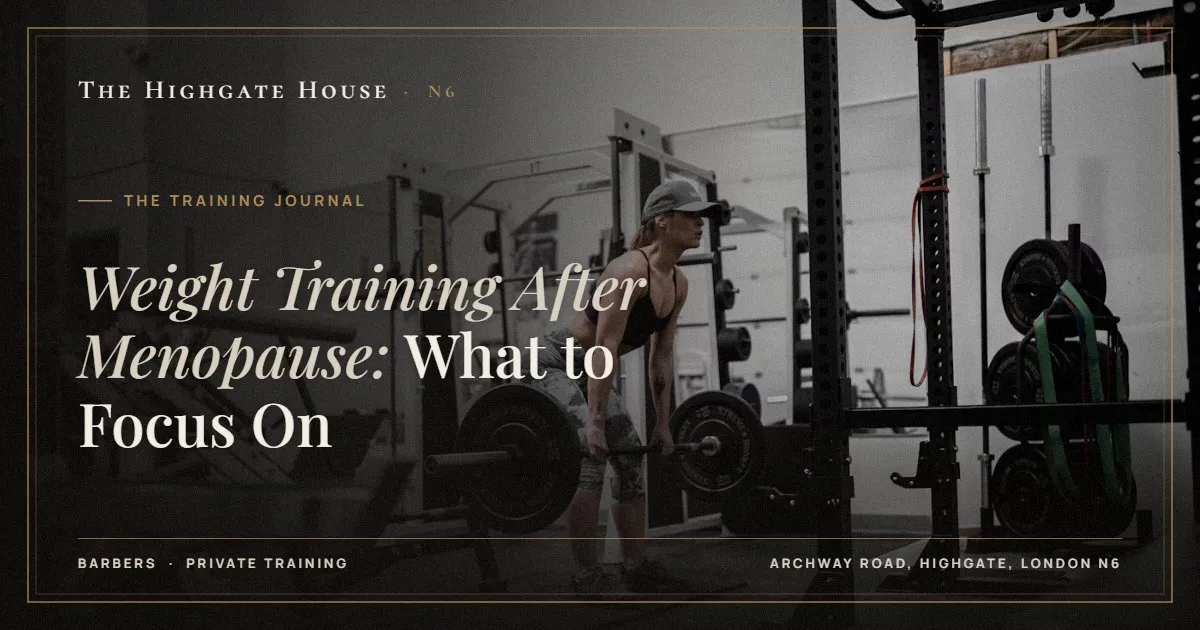
Weight Training After Menopause: What to Focus On
After menopause, the four things worth focusing on in the gym are muscle, bone, balance and the ability to move quickly. Lower oestrogen speeds up the loss of bone density, and muscle declines with age unless you give it a reason to stay. Strength training two or three times a week, with weights that feel genuinely challenging by the last few reps, addresses both. Add some impact or jumping if your bones and joints allow it, a little balance work, and a few movements done with intent and speed. Progress the load gradually over months. It is never too late to start, and the returns are larger than most women expect.
Why the priorities change after menopause
Menopause is defined as 12 months without a period, and the years after it bring two changes that matter for training. The first is bone. Oestrogen helps protect bone, and as levels fall, bone density tends to drop more quickly, which raises the risk of osteoporosis and fracture. The NHS lists regular weight-bearing exercise and resistance exercise among the ways to keep bones healthy in its guidance on preventing osteoporosis.
The second is muscle. Everyone loses muscle and strength with age if they do nothing to keep it, and the loss of power, the ability to produce force quickly, tends to go fastest of all. Power is what saves you when you trip on a kerb. Many women also notice body shape shifting, with more fat stored around the middle than before. Strength training does not stop any of this entirely, but it slows it considerably and in many cases reverses it for years.
If you are still in the transition, with irregular periods and symptoms, the earlier stage brings its own considerations around sleep, recovery and energy. Our guide to strength training through perimenopause covers that period specifically.
Focus 1: lift heavy enough to matter
The most common mistake I see is weights that are too light for too long. Pink dumbbells for 20 reps feel like exercise, but bone and muscle respond to load that is genuinely challenging. That does not mean maximal lifts on day one. It means working towards sets of 5 to 10 reps where the last two are hard, with good technique, once you have learned the movements.
The core movements:
- Squat - goblet squat first, then a barbell if it suits you.
- Hip hinge - Romanian deadlift or a trap bar deadlift. Strong hips and back matter for bone in the hip and spine.
- Push - a press, horizontal and overhead.
- Pull - rows and lat pulldowns. Upper back strength supports posture.
- Carry - farmer’s walks, which train grip, trunk and legs together.
- Step-ups or split squats - single leg strength for stairs and balance.
Focus 2: give your bones a reason to respond
Bone responds to loads that are higher than usual and applied with some variety. Walking is good for general health but on its own is a modest stimulus for bone in most people. The UK consensus statement on exercise for osteoporosis, published by the Royal Osteoporosis Society and colleagues, recommends a combination of muscle strengthening and impact exercise, adjusted to the individual. For women without osteoporosis or previous fragility fractures, that can include small jumps, stamps or heel drops, built up gradually.
If you have been diagnosed with osteoporosis or have had a fracture, training is still recommended, but the choice of exercises and impact levels needs care. Talk to your GP or specialist first and bring any scan results to your first session. Our post on what the guidance says about bone health and strength training covers the evidence in more detail.
Focus 3: balance and power
Falls are what turn weaker bones into fractures. Two kinds of training reduce the risk:
- Balance work, such as single-leg standing, step-ups, slow lunges and carrying a weight in one hand. These can sit in a warm-up and take five minutes.
- Power work, meaning moving a moderate load with intent and speed. Standing up quickly from a box, a fast step-up, a brisk push on the cable. Short sets, full recovery, perfect control.
Neither needs a separate session. Built into a strength workout, they take ten minutes a week and do more for everyday confidence than almost anything else.
A sample training week
| Day | Session | Main content |
|---|---|---|
| Monday | Strength A, 50 minutes | Squat, row, overhead press, farmer’s carry, balance drills |
| Wednesday | Walk, 30 to 45 minutes | Brisk, ideally with some hills |
| Thursday | Strength B, 50 minutes | Deadlift variation, press, lat pulldown, step-ups, small jumps if suitable |
| Weekend | Something you enjoy | Tennis, swimming, a long walk on the Heath |
Two strength sessions is the minimum that meets the UK Chief Medical Officers’ guidance for muscle strengthening. Three is better if you can fit it in, but two done for years beats three done for a month.
How to start, and how fast to progress
- Weeks 1 to 4: learn the movements with moderate weights. Two or three sets of 8 to 12 reps, stopping with a few reps in reserve.
- Weeks 5 to 12: add load in small steps. Bring the main lifts down to 6 to 8 reps with the last two hard.
- After three months: introduce low-level impact if suitable, and a little power work in each session.
- Ongoing: keep a log, add weight when the top of the rep range feels solid, and take an easier week every couple of months.
Recovery, food and the rest of the picture
- Protein. Older muscle responds less readily to protein, so a decent portion at each meal, not just dinner, helps. Our guide to protein for building muscle gives practical amounts.
- Calcium and vitamin D. Both support bone. The NHS advises considering a vitamin D supplement in autumn and winter. Ask your GP about your own needs.
- Sleep. Night sweats and broken sleep affect recovery. On bad nights, train lighter rather than skipping.
- Joints. Some women notice more joint aches. Longer warm-ups and controlled tempo help; sharp pain is a reason to stop and adjust.
Check with your GP first if you have osteoporosis or a previous fracture, a heart condition, uncontrolled blood pressure, pelvic floor symptoms, or are returning after a long break or surgery.
How we coach this in the studio
Private sessions at The Highgate House start with a conversation about your history, any scans or diagnoses, and what you want to be able to do. The InBody scan gives a baseline for muscle mass so we can track it over time. The studio is booked to you alone, which many women tell us makes it easier to learn lifts without an audience. You can read more about private 1-1 training in Highgate.
Questions we get asked
Is it too late to start lifting at 60 or 70?
No. Muscle responds to training at any age. Start lighter, progress patiently and get your technique coached.
Will lifting help with weight gain around my middle?
It helps you keep muscle while losing fat, which changes shape over time. Food and daily activity still do most of the work for fat loss.
Are jumps safe after menopause?
For many women, yes, built up gradually. If you have osteoporosis, pelvic floor problems or joint pain, take advice first.
Can strength training replace HRT?
No. They do different things. HRT is a medical decision for you and your doctor; training is worth doing either way.
If you would like a plan built around your own history, see personal training at our Highgate studio.
Book with The Highgate House
Ready to start training properly? Email us at [email protected] with the service and the day that suits you, and we will come back to you with times.
Visit The Highgate House · Private personal training
The Highgate House, Archway Road, Highgate, London N6.
