A Simple Fat Loss Meal Structure You Can Repeat All Week
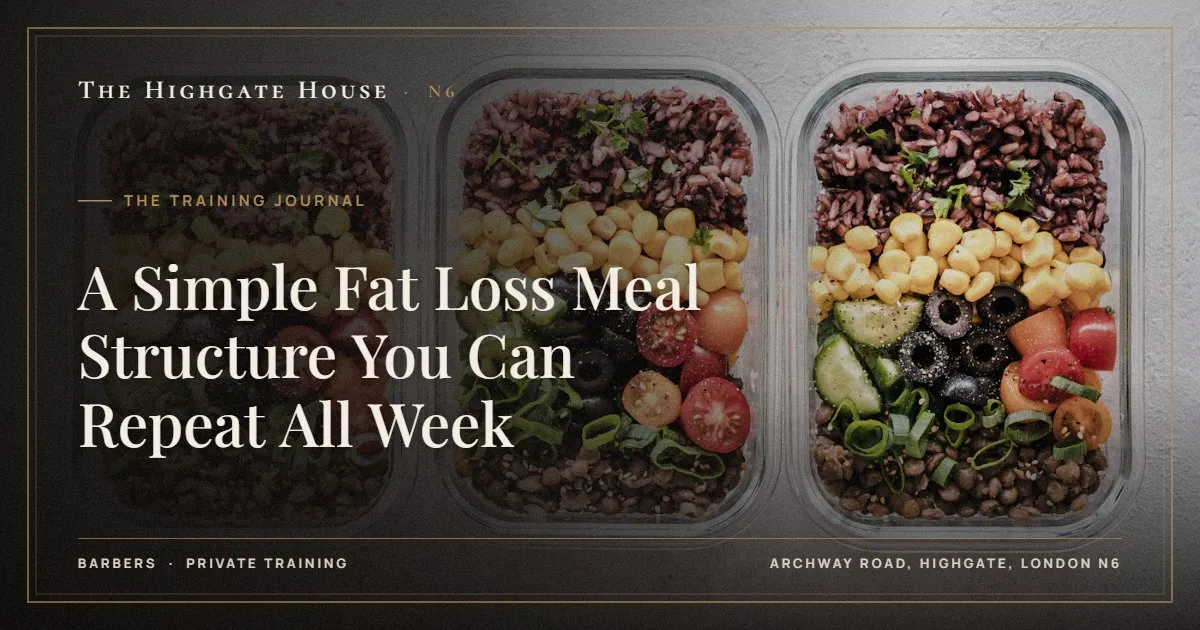
A fat loss meal plan that lasts is a structure, not a list of recipes. Eat three main meals and, if you need it, one planned snack. Build every meal the same way: a portion of protein, a large serving of vegetables or salad, a measured portion of carbohydrate, and a small amount of fat. Choose two or three options for each meal slot and rotate them through the week. That gives you enough variety to stay sane, enough repetition to know roughly what you are eating, and a framework you can shrink or grow when progress slows. It works because it removes daily decisions, which is where most diets fall apart.
Below is the structure I use with clients who want to lose fat without weighing every gram, and how to adjust it.
Why structure beats a recipe plan
Printed meal plans tend to fail in the second week. They assume you will shop for twenty ingredients, cook a different dinner each night, and enjoy every recipe. Real weeks include late meetings, children’s leftovers and a fridge with half a cucumber in it.
A structure is flexible by design. You know what a fat-loss meal looks like, so you can build one from whatever is available: at home, at a work canteen, from a supermarket meal deal or on a restaurant menu. The foods change; the shape of the plate stays the same.
Fat loss itself comes down to eating less energy than you use over time. If that idea is new to you, read what a calorie deficit is first. The structure below is simply a practical way to create one without counting everything.
The plate template
Every main meal follows the same four parts. Hands are a good portable measure; my guide to the hand method for portion control goes into more detail.
| Part | Starting portion | Examples |
|---|---|---|
| Protein | One to two palms | Chicken, fish, eggs, Greek yoghurt, lean mince, tofu, lentils with cottage cheese |
| Vegetables | One to two fists, or half the plate | Salad, broccoli, peppers, green beans, frozen mixed veg |
| Carbohydrate | One cupped hand | Rice, potatoes, wholegrain bread, oats, pasta, fruit |
| Fat | One thumb | Olive oil, butter, cheese, nuts, avocado |
Protein comes first because it helps you feel full and protects muscle while you lose fat. Vegetables add volume and fibre for very little energy. Carbohydrate and fat are the two dials you turn when you need to adjust.
Building your week
Choose two or three options for each slot. You will eat each one several times. That is fine. Most people eat the same handful of breakfasts and lunches anyway; this just makes it intentional.
Breakfast (pick two)
- Greek yoghurt with berries and a small handful of oats or granola.
- Two or three eggs with wholegrain toast and tomatoes or spinach.
- Porridge made with milk, with a scoop of protein powder or a side of yoghurt.
Lunch (pick two)
- A large salad with chicken, tuna or eggs, a portion of new potatoes or bread, and a light dressing.
- A wholegrain wrap with lean protein and salad, plus a piece of fruit.
- Leftovers from last night’s dinner.
Dinner (pick three)
- Salmon or white fish, rice, and two vegetables.
- Chicken or turkey stir-fry with plenty of vegetables and a portion of noodles or rice.
- Lean mince chilli or bolognese with beans, extra vegetables and a measured portion of rice or pasta.
One planned snack, if you need it
- A piece of fruit and a yoghurt, a protein bar, or carrot sticks with hummus.
Cook dinners in double batches so that lunch is often taken care of. If you want to make the cooking more efficient, my 60-minute Sunday meal prep routine fits this structure neatly.
A sample week at a glance
- Monday to Thursday: rotate two breakfasts, two lunches and three dinners. No new decisions.
- Friday: a meal out or a takeaway, chosen with the same plate shape in mind.
- Saturday: a more relaxed day, but keep breakfast and lunch on structure.
- Sunday: a normal family meal, then shop and prep for the week ahead.
Weekends are where a good week often gets undone. Keeping two of the three meals on structure gives you room to enjoy one without losing the week’s progress.
How to adjust when progress stops
Track your bodyweight a few mornings a week and look at the average, not single days. Also note how your clothes fit and, if you can, measure your waist. Give any change at least two to three weeks before judging it. The NHS suggests that losing around 0.5kg to 1kg a week is a safe, realistic rate for most people; its Better Health weight loss pages have more general guidance.
If the average has not moved in that time:
- First, check consistency. Were you actually following the structure, or were snacks, drinks and weekends creeping in?
- If you were consistent, reduce carbohydrate at one meal by about half a portion.
- Or reduce the fat portion at two meals, especially oil used in cooking.
- Keep protein and vegetables the same.
- Reassess after another two to three weeks.
Make one change at a time, so you know what worked.
Where training fits in
You can lose weight through eating alone, but strength training helps you keep muscle while you do it, so more of what you lose is fat. Two or three well-planned sessions a week is enough for most people starting out. In our private studio, training clients get help building this kind of eating structure around their week as well as a training plan, which is why 1-1 personal training in Highgate tends to work better than a printed plan alone.
If you have diabetes, a history of disordered eating, are pregnant, or have any medical condition, check with your GP first before deliberately cutting calories.
Details of sessions and current prices are on the personal training page.
Questions we get asked
Is it fine to eat the same meals every day?
Yes, as long as the meals cover a range of foods across the week. Rotating two or three options per meal gives enough variety for most people.
How many meals a day should I eat to lose fat?
Whatever number you can stick to. Three meals and an optional snack suits most people, but the total amount you eat matters more than how often.
Do I need to count calories?
Not necessarily. A consistent plate structure and a regular check on your weight trend works for many people. Counting can help if progress stalls.
What if I am always hungry?
Increase protein and vegetables first, check you are sleeping well, and make sure you are not cutting too aggressively.
Book with The Highgate House
Ready to start training properly? Email us at [email protected] with the service and the day that suits you, and we will come back to you with times.
Visit The Highgate House · Private personal training
The Highgate House, Archway Road, Highgate, London N6.
