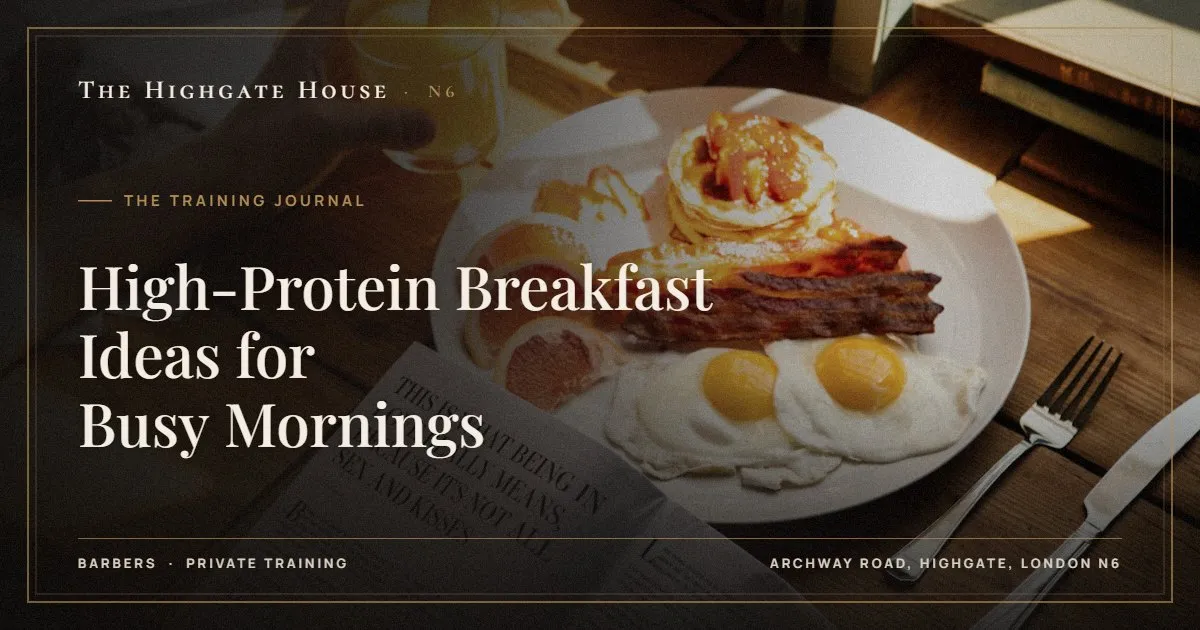
High-Protein Breakfast Ideas for Busy Mornings
The quickest high protein breakfasts are built on four foods most kitchens already have: eggs, Greek yoghurt or skyr, cottage cheese and something smoked or tinned (salmon, mackerel, ham). Pick one as the base, add fruit or wholegrain carbohydrate, and you have 25 to 35 grams of protein in under ten minutes. Below are ten combinations I give clients who leave the house before 7.30, the rough protein in each, what to prepare on a Sunday, and the small mistakes that turn a “healthy” breakfast into one that leaves you raiding the office biscuits by eleven.
Why protein at breakfast is worth the effort
Most people I train eat the bulk of their protein at dinner. A typical London weekday looks like toast or a pastry, a sandwich at the desk, then a proper meal at 8pm. Total protein for the day ends up short, and almost all of it arrives in one sitting.
Moving 25 grams or more to the morning does three useful things. It makes your daily target easier to hit without forcing down a huge dinner. Protein is filling, so the mid-morning slump and the snack that follows it tend to shrink. And if you train, spreading protein across the day is a sensible, widely accepted way to support muscle repair. How much you need overall depends on your goal; our guides on protein for fat loss and protein for building muscle cover the numbers.
Breakfast is not magic, and skipping it is not a crime. If you do well on coffee until lunch, carry on. This is for people who eat breakfast anyway and want it to do more work.
Ten breakfasts, with rough protein per serving
Figures are approximate and based on typical UK supermarket labels. Brands vary, so check yours once and you will know for good.
| Breakfast | Time | Rough protein |
|---|---|---|
| 250g Greek yoghurt (0%), berries, 20g oats | 2 min | 25 to 28g |
| 3 scrambled eggs, 50g smoked salmon, 1 slice rye | 6 min | 30 to 33g |
| 200g cottage cheese on 2 rye crispbreads with tomato and pepper | 3 min | 22 to 25g |
| Overnight oats: 40g oats, 150g skyr, 150ml milk | Prep night before | 25 to 28g |
| 2 egg muffins (made Sunday) plus a glass of milk | 1 min | 20 to 24g |
| Tinned mackerel on toast with lemon | 4 min | 22 to 26g |
| Omelette with 3 eggs, ham and spinach | 7 min | 28 to 32g |
| Protein shake blended with a banana and 200ml milk | 2 min | 30 to 35g |
| A 150g skyr pot plus two boiled eggs from the fridge | On the train | 25 to 28g |
| Firm tofu scramble (150g) with turmeric, onion and a slice of toast | 8 min | 20 to 24g |
The two I suggest most often
Yoghurt bowl. It needs no cooking, works at the desk if you leave a tub in the office fridge, and scales easily: add more yoghurt for more protein, more oats or fruit if you train hard that morning. Buy plain and add your own fruit; flavoured versions often carry more sugar than you would choose to add.
Eggs and something. Three eggs give you a solid base. Adding smoked salmon, ham or a spoon of cottage cheese stirred in at the end lifts the total past 30 grams without making the plate bigger. Cottage cheese in scrambled eggs sounds odd and tastes like a creamier version of normal scrambled eggs.
What to prepare on a Sunday
The breakfast that gets eaten is the one already made. Thirty minutes on Sunday covers most of the week.
- Boil eight eggs. Ten minutes for firm yolks, then cold water. Unpeeled, they keep in the fridge for several days.
- Bake a tray of egg muffins. Whisk ten eggs with chopped peppers, spinach, spring onion and a little cheese, pour into a muffin tin and bake at about 180C for 20 minutes. Cool, then refrigerate in a sealed box.
- Make three jars of overnight oats. Oats, skyr and milk in each, fruit added on the morning so it does not go soft.
- Portion yoghurt. Decant a large tub into smaller pots so you are not measuring at 6am.
Follow standard food safety advice on how long cooked eggs and prepared food keep; the Food Standards Agency’s guidance on chilling is the clearest reference. If you want the same approach for lunches and dinners, see our post on meal prep for busy professionals.
Breakfast before an early training session
Clients often ask whether to eat before a 6.30am session. There is no single rule. Some people train perfectly well on an empty stomach for an hour. Others feel light-headed by the third set.
If you do eat, keep it small and easy to digest 45 to 60 minutes before: half a yoghurt bowl, a banana and a glass of milk, or a slice of toast with an egg. Then have a fuller high protein breakfast afterwards. If you cannot face food that early, have a proper breakfast after training and do not worry about it. We go into this in more detail in what to eat before a workout.
When people start 1-1 training with me in Highgate, breakfast is often the first meal we adjust, because it is the most repetitive. Get one good default in place and you have fixed seven meals a week.
Mistakes that leave you hungry by 11am
- Trusting the front of the pack. “High protein” granola or bars can deliver 8 or 10 grams per serving. Read the label and compare it to a pot of skyr.
- All carbohydrate, no protein. Porridge with honey and banana is a decent breakfast, but on its own it rarely holds you until lunch. Stir in skyr or have eggs alongside.
- Drinking breakfast as a large flat white. Milk adds some protein, but a coffee is not a meal. Have it with food.
- Going too small when you are cutting. A tiny breakfast often leads to a bigger lunch and an afternoon of grazing. A 30 gram protein breakfast is more likely to keep your day on track.
- Rotating too much. Variety is nice at weekends. On weekdays, two or three reliable defaults beat ten recipes you never get round to.
Fitting it into the rest of your diet
A high protein breakfast works best as part of a broadly balanced diet that still includes fruit, vegetables, wholegrains and some fat. The NHS Eatwell Guide is a sensible frame. If you have kidney disease, are pregnant, or have been told to follow a specific diet, check with your GP or dietitian before raising your protein intake significantly.
Supplements are optional. A shake is convenient on days when you have no time, but food covers most people’s needs. Our post on whether you need protein powder sets out when it is genuinely useful.
Questions we get asked
How much protein should breakfast have?
For most adults who train, aiming for roughly 25 to 35 grams is a practical target. It is enough to make a dent in your daily total without needing a huge plate.
Are eggs every day a problem?
For most healthy people, eggs are a nutritious everyday food as part of a balanced diet. If you have been advised to watch your cholesterol, follow your GP’s guidance.
Is a protein shake a good breakfast?
It is a convenient one. Blending it with milk and fruit, or having it alongside toast, makes it more of a meal and more filling than powder and water.
What if I am vegetarian or vegan?
Dairy and eggs make it easy for vegetarians. For a plant-based breakfast, tofu, soya yoghurt, soya milk and a plant protein powder do most of the work.
If you want a plan that covers food and training together, read how our private personal training studio works.
Book with The Highgate House
Ready to start training properly? Email us at [email protected] with the service and the day that suits you, and we will come back to you with times.
Visit The Highgate House · Private personal training
The Highgate House, Archway Road, Highgate, London N6.
