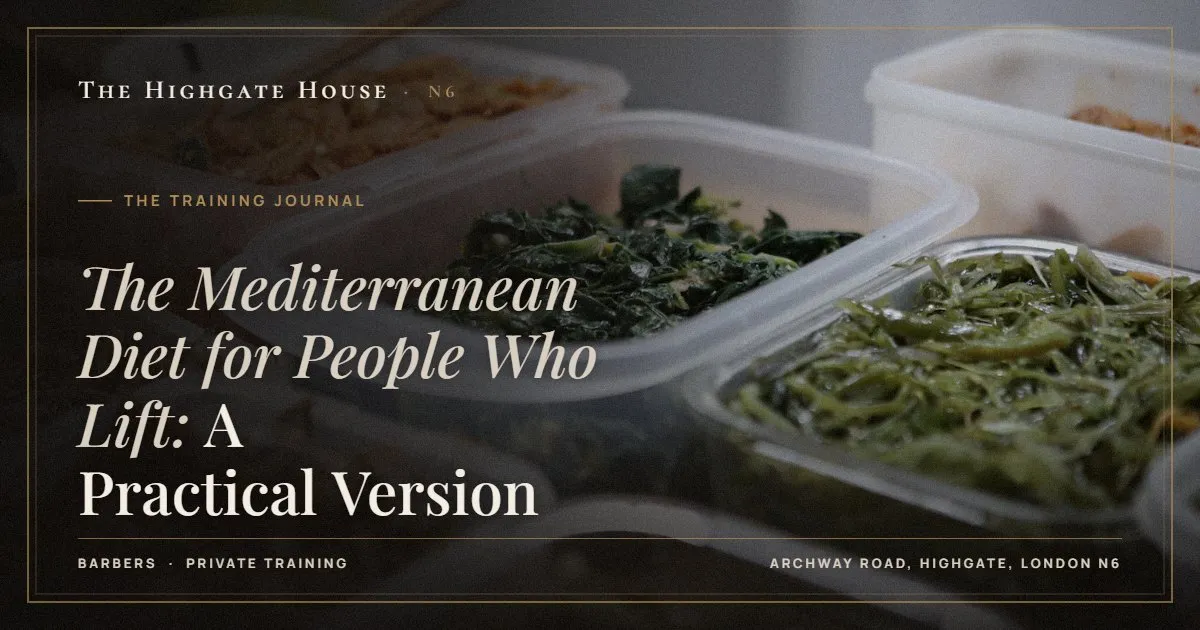
The Mediterranean Diet for People Who Lift: A Practical Version
The Mediterranean diet works well for people who lift weights, with one adjustment: you need to deliberately add more protein than the traditional pattern provides. The core of it suits training very well: plenty of vegetables, fruit, beans and lentils, whole grains, fish, olive oil and nuts, with less red and processed meat and fewer sugary foods. It is also one of the most studied eating patterns in the world and is widely linked with good heart health. The gap is protein. A typical Mediterranean plate is generous with vegetables and grains and fairly modest with meat and fish, so a lifter has to build each meal around a protein source first and then let the Mediterranean habits fill in the rest.
Here is a version that works on a London weeknight, from a UK supermarket, around a training schedule.
What the Mediterranean diet actually is
It is not a recipe book or a set of rules. It describes how people in parts of southern Europe traditionally ate, and the common threads are simple:
- Vegetables, fruit, beans, lentils and whole grains make up most of what you eat.
- Olive oil is the main cooking and dressing fat.
- Fish and seafood appear several times a week.
- Poultry, eggs, cheese and yoghurt are eaten in moderate amounts.
- Red meat and sweets are occasional.
- Meals are often shared and eaten slowly.
Much of this overlaps with the NHS Eatwell Guide. The Mediterranean version just leans more on olive oil, legumes and fish.
The adjustment lifters need: protein first
If you are training to build or keep muscle, protein needs to be spread across the day in decent portions. I explain the reasoning and the ranges in how much protein to build muscle. The Mediterranean pattern makes this easy once you know where to look:
- Fish: salmon, sardines, mackerel, cod, prawns. Tinned fish counts and is one of the cheapest good proteins in the shop.
- Greek yoghurt: thick, high in protein, and works at breakfast, with fruit, or as a sauce base.
- Eggs: a shakshuka or a frittata is pure Mediterranean cooking.
- Chicken and turkey: grilled with lemon, garlic and herbs.
- Legumes: chickpeas, lentils and beans add protein and fibre, though you need a fair amount to match a portion of meat or fish, so I use them alongside an animal protein rather than instead of one for most clients.
- Cheese: feta, halloumi and parmesan add flavour and some protein, but they are rich, so use them as a topping rather than the main event.
A simple rule: each main meal should have a palm-sized or larger portion of protein on the plate before you add anything else.
Olive oil: good, but not unlimited
Olive oil is the defining fat of the diet, and extra virgin olive oil is a sensible everyday choice. But it is still oil, and every tablespoon carries a meaningful amount of energy. People adopting the Mediterranean diet for fat loss often stall because they pour it freely over everything.
If fat loss is the goal, measure it for a week. Use a tablespoon rather than pouring from the bottle. You will quickly learn what a sensible amount looks like on a salad or in a pan, and then you can go back to judging by eye.
A sample training day
This is the kind of day I sketch out with clients who train early or after work. Swap freely; the structure matters more than the specific foods.
| Meal | Example | Why it works |
|---|---|---|
| Breakfast | Greek yoghurt, berries, a handful of walnuts, a little honey | Quick protein, fruit and healthy fat |
| Lunch | Tinned tuna or chicken, chickpeas, tomato, cucumber, red onion, parsley, lemon and olive oil | Protein from two sources, plenty of fibre, packs well |
| Before training | A piece of fruit and a slice of wholegrain bread or a few crackers with cheese | Easy carbohydrate without feeling heavy |
| Dinner | Baked salmon, roasted peppers and courgettes, new potatoes or bulgur wheat | Protein plus carbohydrate to recover |
| If hungry | Hummus with carrot sticks, or a boiled egg and olives | Filling, simple, no cooking |
Carbohydrates are not the enemy here
Some people try to combine the Mediterranean diet with very low carbohydrate eating. For most people who lift, that is unnecessary. Whole grains, potatoes, beans and fruit fuel harder sessions and help recovery. Choose wholegrain versions where you can, keep portions in line with your goals, and let your training days carry slightly more carbohydrate than rest days if that suits you. If you want the bigger picture on balancing protein, carbs and fat, see macros explained.
Common mistakes
- Too little protein. A big salad with a few chickpeas is not a training meal. Add fish, chicken, eggs or yoghurt.
- Too much oil and bread. Both are part of the diet, but restaurant-sized portions of each add up quickly.
- Treating wine as health food. The UK Chief Medical Officers advise not regularly drinking more than 14 units a week, spread over three or more days. Wine is a choice, not a requirement of the diet.
- Buying “Mediterranean” ready meals. The label does not make it the diet. Read the ingredients and the protein content.
- Expecting it to work without the training. Eating well supports progress; it does not replace lifting.
A weekly shopping list that makes it easy
- Tinned fish: sardines, mackerel, tuna, salmon
- Fresh or frozen salmon or white fish
- Greek yoghurt and eggs
- Tinned chickpeas, lentils and cannellini beans
- Bags of salad, tomatoes, cucumber, peppers, courgettes, onions
- Frozen spinach and mixed vegetables
- Bulgur wheat, wholegrain bread, new potatoes, wholewheat pasta
- Extra virgin olive oil, lemons, garlic, dried oregano
- Walnuts, almonds, olives, fruit
Putting it alongside your training
Food decides how well you recover from the work you do in the gym, and the Mediterranean pattern is an easy one to live with long term. In private 1-1 personal training sessions in Highgate I help clients adapt this kind of eating to their schedules, their family meals and their goals, rather than handing over a rigid plan. If you have a heart condition, diabetes, kidney disease or another health issue, or you take medication that interacts with food, check with your GP first before making significant changes to your diet. Details of how training works and current prices are on the personal trainer page.
Questions we get asked
Can you build muscle on a Mediterranean diet?
Yes, as long as you eat enough total food and include a good portion of protein at each meal. Fish, eggs, yoghurt and poultry make that straightforward.
Is the Mediterranean diet good for fat loss?
It can be. Fat loss still depends on eating less energy than you use, so watch portions of oil, bread and cheese.
Do I have to drink red wine?
No. Alcohol is optional, and the UK Chief Medical Officers’ low-risk guideline is not to regularly drink more than 14 units a week.
Is pasta allowed?
Yes. A sensible portion of pasta with a protein-rich sauce and vegetables fits well, especially on training days.
Book with The Highgate House
Ready to start training properly? Email us at [email protected] with the service and the day that suits you, and we will come back to you with times.
Visit The Highgate House · Private personal training
The Highgate House, Archway Road, Highgate, London N6.
