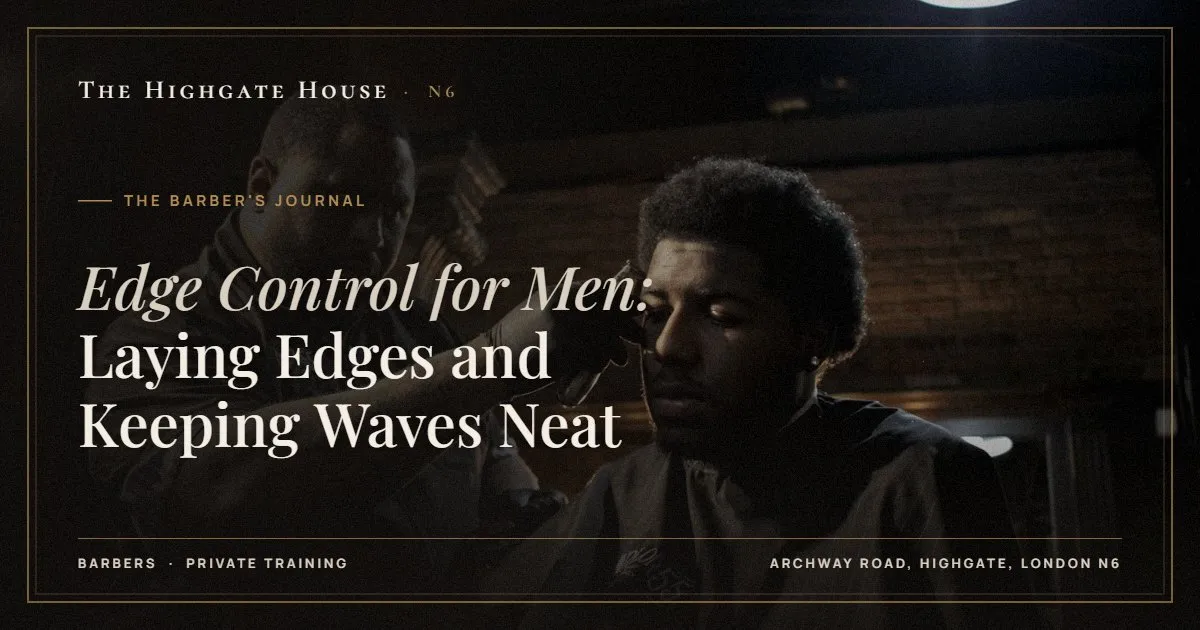
Edge Control for Men: Laying Edges and Keeping Waves Neat
Edge control is a firm, gel-like styling product made to smooth and hold the short hairs along your hairline, temples and sideburns. For men it does three jobs: it keeps a fresh line up looking sharp for an extra few days, it lays down the fuzzy edges around a wave pattern, and it tames flyaways on a short afro or twists. Use a pea-sized amount, work it in with a small brush in the direction you want the hair to lie, then tie a durag or band over it while it sets. Too much product, or using it on a dirty hairline, is what causes the white flakes people complain about.
What edge control is, and how it differs from gel
Most edge controls are thicker than a standard gel, with more hold and usually some oil or butter in the formula to add shine and stop the hair drying out. They are designed for small areas and very short hairs, so they grip at low quantities. A normal gel tends to need more product for the same hold, which is where the crunch and flaking start.
Formulas vary a lot. Some are water-based and wash out easily. Others are heavy with waxes and castor oil, which hold beautifully in humid weather but build up if you use them daily without washing them out properly. If you are new to it, a water-based product with medium hold is the easiest place to start.
When men actually use it
- After a line up. A clean shape-up looks sharpest on day one. Brushing a little edge control along the front and temples makes it look closer to day one on day three or four, because the hairs lie flat against the line instead of curling across it. It does not stop hair growing back; it just hides the softening for a bit longer. Our guide to the line up haircut explains how barbers cut that edge in the first place.
- Waves. Wavers use it on the perimeter, where the pattern meets the hairline, so the waves run cleanly to the edge rather than breaking into fuzz.
- Short afro, twists and sponge curls. A touch at the temples and nape keeps the shape looking deliberate between cuts.
- Beard edges. Some men use a tiny amount on the cheek line or moustache corners. Test a small patch first; skin on the face is more reactive than the scalp.
How to lay your edges: step by step
- Start with a clean, slightly damp hairline. Product on top of yesterday’s product is how flaking begins. A splash of water or a light mist is enough; you do not need to wash your whole head every morning.
- Take a pea-sized amount. For a full hairline on short hair, that is genuinely enough. Warm it between finger and thumb so it spreads evenly.
- Apply with a small brush. A soft edge brush, a clean old toothbrush or a narrow boar-bristle brush all work. Brush in the direction you want the hair to lie: forward or back at the front, down and slightly forward at the temples, down at the nape.
- Lay it, do not paint it. Short, light strokes along the line. You are pressing the hair down, not coating the skin.
- Tie it down. A durag, wave cap or a soft band over the hairline for 10 to 20 minutes lets the product set flat. Wavers will usually do this anyway. See how to wear a durag if you want the method.
- Wipe the skin. Clear any product from the forehead and temples with a damp cloth. Left on skin, it can dry white and can contribute to blocked pores.
Edge control for waves specifically
For waves, the product does a slightly different job. You are not styling a single line; you are training the outer ring of your pattern to keep following the direction you brush. The routine that tends to work:
- Moisturise the hair first with whatever you normally use. Edge control is a finish, not a moisturiser.
- Brush the whole head as normal, then apply a small amount of edge control only to the perimeter.
- Brush the edges in the same direction as the waves next to them, so the pattern runs to the line.
- Durag on straight away.
Heavy edge control across the whole crown flattens waves and clogs the brush. Keep it to the edges. The 360 waves guide covers the brushing pattern itself.
Why it flakes, and how to stop it
| Problem | Likely cause | What to change |
|---|---|---|
| White flakes by midday | Too much product, or layering over old product | Halve the amount and rinse the hairline first |
| Hair stiff and crunchy | Hold too strong for your hair, or applied to dry hair | Dampen the hair first or switch to a medium hold |
| Edges dull and dry | Alcohol-heavy formula, no moisture underneath | Moisturise first, choose a formula with some oil |
| Itchy or red hairline | Reaction to an ingredient or fragrance | Stop using it and patch test anything new |
| Product sliding by evening | Heat and sweat, or too much oil in the formula | Thinner layer, more set time under the durag |
If you get a red, itchy rash where products touch your skin, it may be contact dermatitis. The NHS has clear guidance on contact dermatitis, and a pharmacist is a good first stop.
Keeping the hairline healthy
The hairline is the most fragile part of the head. Edge control itself is not the risk; what people do around it can be.
- Don’t tie anything tight. Constant pulling tension at the edges, from a tight durag, band or styling, can lead to traction alopecia, a gradual thinning that can become permanent. The NHS lists it under types of hair loss. Snug is fine. Tight enough to leave a mark is not.
- Use a soft brush on the edges. A hard wave brush scrubbed back and forth along the temples is harsh. Switch to a soft brush for the hairline.
- Wash it out properly. At least once or twice a week, cleanse the hairline so heavier products do not build up on the scalp.
- Don’t rely on it to hide a pushed-back line. If your line up is creeping back, product is not the fix. That is a conversation for your barber.
Choosing a product without trial and error
A few things worth checking on the label before you buy:
- Hold level. Medium for waves and everyday edges; strong only if your hair is coarse and stubborn.
- Base. Water-based products rinse out easily; wax and butter-heavy ones need a proper wash.
- Alcohol near the top of the list. Fine for some, but it can dry out coarse hair.
- Fragrance. If your skin is sensitive, unfragranced is the safer choice.
- Tub size. You use very little. A small tub lasts months, so a big one is often wasted.
What your barber can do that product can’t
Edge control works best on a hairline that has been cut well in the first place. A line that follows your natural hairline, rather than being pushed back for sharpness, needs less product and looks better as it grows. At Highgate Cuts every visit starts with an assessment: the barber looks at your hair, your hairline and how you wear it, then makes recommendations, including how often to come back for a line up. See our barber services in Highgate for what we offer.
Questions we get asked
Is edge control bad for your hair?
Used sparingly and washed out regularly, no. Problems usually come from build-up, tight tying, or harsh brushing at the hairline rather than the product itself.
Can I use edge control every day?
Yes, if you rinse the hairline before reapplying and give it a proper wash once or twice a week.
Can I use gel instead?
You can, but most gels need more product for the same hold and are more likely to flake on short edges.
Will it make my line up last longer?
It makes it look sharper for longer. The hair still grows at the same rate. For booking and timing, take a look at our Highgate barbers page or visit The Highgate House.
Book with The Highgate House
Ready for a proper cut? Email us at [email protected] with the service and the day that suits you, and we will come back to you with times.
Visit The Highgate House · The barbers
The Highgate House, Archway Road, Highgate, London N6.
