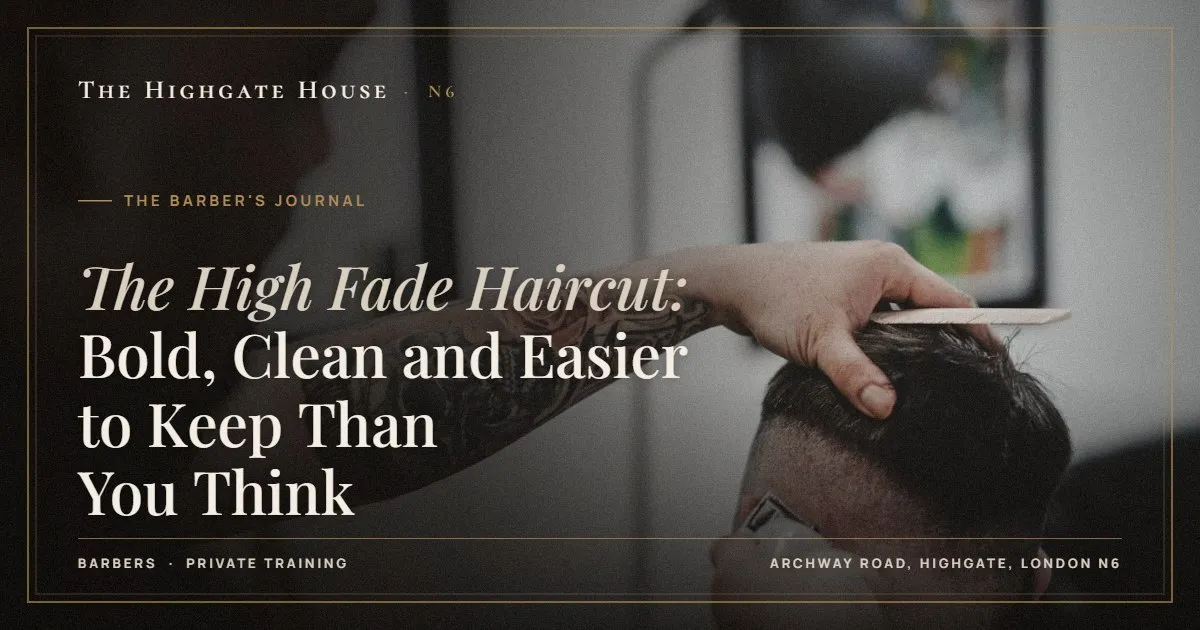
The High Fade Haircut: Bold, Clean and Easier to Keep Than You Think
A high fade is a haircut where the shortest part of the sides runs up to around the point where the side of the head turns into the top, and the blend into longer hair happens in a narrow band just below that corner. It suits strong, even head shapes, short to medium length on top and people who like a clean, deliberate outline. It is also simpler to live with than it looks: almost nothing to style at the sides, and a rebook every two to three weeks keeps it honest. The catch is that it shows everything, so the brief matters.
Where a high fade actually sits
Barbers describe fade height by where the shortest length stops. On a low fade that line sits just above the ear. On a mid fade it is around the temple. On a high fade it climbs to the parietal ridge, the slight corner where the flat side of the skull rounds into the crown and top. Some people call that line the “horseshoe”, because if you traced it around the head it would make a rough U.
Two variables then decide how the cut reads:
- How short the bottom goes. Taken to skin with a foil shaver it becomes a high skin fade, the highest-contrast version. Left at a short clipper length it becomes a high shadow fade: still crisp, but softer, and kinder to pale scalps and visible scars.
- How tight the blend is. Because the fade has less vertical space to travel, the gradient is compressed. A good barber will still make it smooth; a rushed one leaves visible bands, which on a high fade sit right at eye level for anyone standing next to you.
Who a high fade suits, and who should think twice
We assess every head before the clippers come out, and the same few factors decide whether a high fade is the right call.
| Factor | Works well | Think twice |
|---|---|---|
| Head shape | Even, rounded back and sides | Flat back, pronounced ridge or dip at the crown |
| Face shape | Round or wide faces, which it lengthens | Long, narrow faces, which it can stretch further |
| Hair on top | Crops, short textured tops, curls, flat tops, buzz lengths | Long, heavy tops that need side bulk to look balanced |
| Scalp | Even skin tone, no scarring you mind showing | Scars, birthmarks or flaking you would rather keep covered |
| Hairline | Full temples | Receding temples, where removing side hair can exaggerate the recession |
That last row catches people out. If your temples are thinning, a very high fade takes away the hair that frames them, and the top suddenly looks like an island. A mid or drop fade often gives you the same sharpness without the exposure. Equally, a flat back of the head is not a dealbreaker, but the fade may need to step down slightly at the back so the barber can leave weight where it builds shape.
What it looks like at work and at the weekend
The high fade has a reputation as a young, athletic cut, and in its sharpest skin version it is. But a high shadow fade paired with a tidy crop or a short side parting looks orderly rather than aggressive, and plenty of men in conservative offices wear one. The difference is mostly in the top: messy texture says weekend, a neat, combed shape says boardroom. If you are unsure, start with a high shadow fade. You can always go to skin next time; you cannot go back the other way for about a fortnight.
How to ask for a high fade
Every visit with us starts with an assessment, where the barber looks at your hair and what you need, then makes recommendations. You will get the most out of that conversation if you arrive with answers to these:
- Where the short part should stop. Run a finger along the corner of your head where you want it to end. “High” means different things to different barbers.
- Skin or shadow. Say whether you want bare skin at the bottom or a short guard length.
- The top length. In centimetres or finger widths, not clipper numbers, unless the top is clippered too.
- How it should connect. Blended into the top, or a visible step (closer to an undercut).
- Edges. Natural hairline, or a sharper line-up at the front and temples. A sharp line on a high fade looks striking for a week and then needs touching up.
- A photo. Show the side profile, not just the front. Photos of high fades on very different hair types to yours can mislead, so pick one with similar hair.
If you want to compare the heights side by side before you decide, our guide to the mid fade covers the step down, and skin fade vs shadow fade deals with the “how close” question in detail.
Why it is easier to keep than you think
Because the sides are so short, there is nothing there to style, flatten or fight. Hat hair, a damp commute and a gym session barely register on the sides; you only manage the top. Most high fades need one product, a small amount of matte clay or paste on the top, and a towel dry.
The trade-off is visible growth. Hair grows roughly a centimetre a month, and on a skin fade even a few millimetres changes the look, so the sharpest version lasts about a week. Realistic rebooking:
- High skin fade: every two weeks if you want it consistently crisp, three at a stretch.
- High shadow fade: every three weeks, sometimes four.
- Between cuts: a neckline tidy is fine at home. Leave the blend alone. Most home “touch-ups” put a hard line exactly where the barber removed one.
Mistakes we see
- Going high and skin on the first ever fade, then finding it more exposed than expected. Build up to it.
- Keeping the top long and heavy. A high fade under a big top looks top-heavy; it wants a shorter, lighter top.
- Skipping sun protection. A high skin fade exposes skin that rarely sees daylight. In summer it burns as easily as your forehead, so use SPF or a cap, as the NHS sun safety guidance recommends for exposed skin.
- Letting it grow for six weeks, then asking for a high fade again from scratch. Growing out is fine, but tell the barber, because the plan might be different.
Growing it out
A high fade is not a trap. If you decide it is not for you, the barber can move the fade down a level at each visit: high, then mid, then low or taper, which keeps you looking deliberate through the change. It takes around two to three cuts. Our piece on growing out a fade sets out the stages.
High fades at Highgate Cuts
The Highgate Cuts team works from the ground floor of The Highgate House, a corner building on Archway Road about five minutes from Highgate tube. Fades are a core part of what we do, alongside scissor cuts, beard work and hot towel shaves. You can see the full service list on the Highgate Cuts barber page. We have not published prices yet, so check the barber menu or email us. Online booking is on its way; for now, booking is by email and we come back to you with times.
If you are thinking about a first high fade, say so when you book your cut with the barbers. We will spend a little longer on the assessment and may suggest starting one step lower. You can also find everything about the building on The Highgate House homepage.
Questions we get asked
Is a high fade the same as a high and tight?
Close, but no. A high and tight is a military-style cut with a very short top and often a hard transition. A high fade can sit under any top length and is normally blended.
Does a high fade make you look older or younger?
Neither, really. It makes you look tidier. What dates it is the top: very long or very styled tops read younger, short and neat ones read classic.
Can I get a high fade with curly or Afro hair?
Yes, and it is one of the cleanest ways to wear curls or a high top, since it frames the shape on top. Mention your hair type when you book.
How long does the cut take?
Longer than a standard clipper cut, because the blend is compressed into a smaller space. Allow time for the assessment and the detailing rather than expecting a ten-minute job.
Book with The Highgate House
Ready for a proper cut? Email us at [email protected] with the service and the day that suits you, and we will come back to you with times.
Visit The Highgate House · The barbers
The Highgate House, Archway Road, Highgate, London N6.
