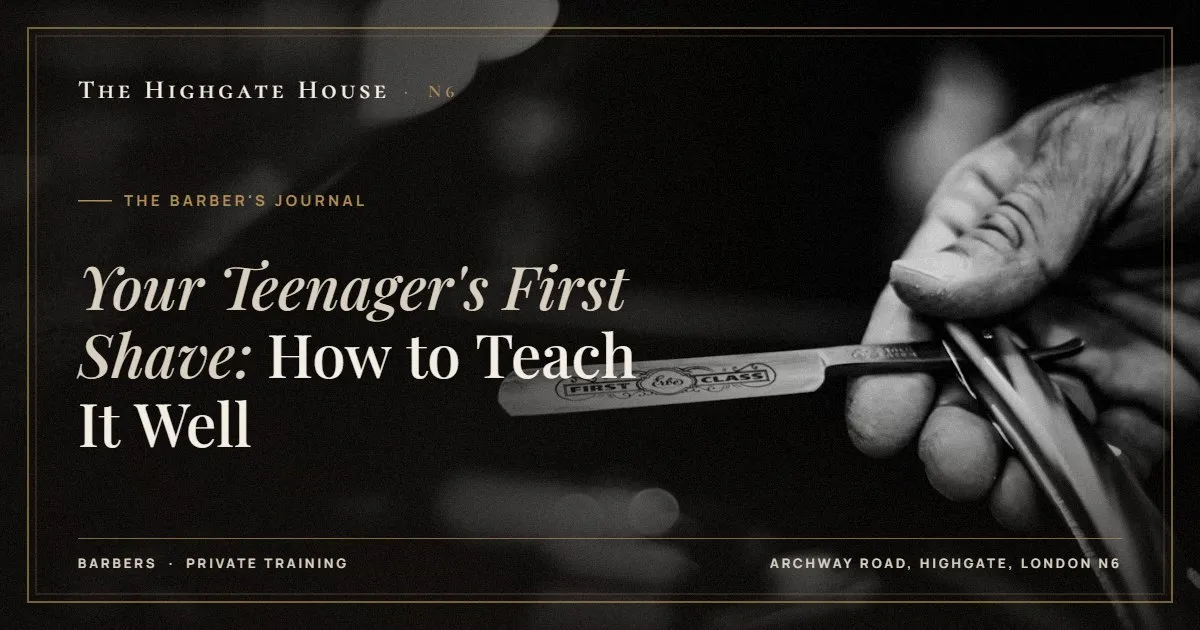
Your Teenager's First Shave: How to Teach It Well
The best time for a teenager’s first shave is when the hair on his upper lip or chin is visible enough to bother him, not at a set age. Teach it slowly, on a weekend, with a simple razor or an electric shaver, a proper shaving gel and warm water. Show him how to find the direction his hair grows, shave with it in short, light strokes, rinse, and moisturise. The aim of the first shave is not a perfect result. It is a calm, nick-free one that he can repeat on his own next week without you standing in the doorway.
When is the right time?
Facial hair arrives on its own schedule. Some boys have a visible moustache at 12, others have very little at 17, and both are normal. The useful questions are practical rather than age-based:
- Is the hair dark or long enough that he notices it, or that others comment?
- Has he asked, or started borrowing a razor without saying so?
- Is he mature enough to handle a blade carefully and keep it to himself?
If the answer to any of those is yes, it is time to teach him properly. The worst first shave is a secret one with a parent’s used cartridge, dry, in a hurry before school. A short, planned lesson avoids that.
One worry we hear often: shaving does not make hair grow back thicker or darker. Shaved hair has a blunt tip, so the regrowth can feel coarser for a few days, but the hair itself is unchanged. If he wants to wait, that is fine too.
What to buy (and what not to)
Keep the kit small. A first shave needs four things:
- A razor. A simple two- or three-blade disposable or cartridge razor is forgiving for a beginner. An electric shaver is even more forgiving and suits teenagers with spots or very sensitive skin, though it shaves slightly less closely. A safety razor is better saved for later, once he has the basics. If you are deciding between the two main options, our guide to electric shavers and razors sets out the trade-offs.
- Shaving gel or cream. Unfragranced and gentle. Avoid anything heavily perfumed for young skin.
- A clean flannel and towel of his own.
- A plain, unfragranced moisturiser. No alcohol-based aftershave splash. It stings and dries the skin, and it will put him off.
What to skip: brushes, pre-shave oils, aftershave sets and multi-step gift kits. They can come later, if he is interested.
How to teach the first shave, step by step
Pick a relaxed morning or evening, not ten minutes before school. Do it alongside him if you shave yourself, because watching is easier than being told.
- Wash the face. Warm water and a gentle cleanser. Ideally shave straight after a shower, when the hair is soft.
- Find the grain. Run a finger across the hair in different directions. The smooth direction is the way it grows. On the upper lip it usually grows down and slightly out; on the neck it can go in several directions. Our guide to shaving with the grain explains how to map it.
- Apply the gel. A thin, even layer over the area being shaved, left on for a moment.
- Show the grip and the angle. Hold the razor lightly, near the end of the handle. The head should sit flat against the skin; a cartridge pivots to do most of the work.
- Short strokes, with the grain, no pressure. Two or three centimetres at a time. Rinse the blade after every couple of strokes.
- Stretch the skin where needed. For the upper lip, pull the lip down over the teeth. For the chin and jaw, tilt the head. This is the bit most beginners miss, and it is where nicks happen.
- One pass is enough. Resist the urge to go back over the same patch or against the grain. A light shadow is better than raw skin.
- Rinse, pat dry, moisturise. Cool water, a clean towel, a little moisturiser.
- Rinse and store the razor. Upright, somewhere it can dry, and away from younger siblings.
The first shave often takes ten minutes or more. That is fine. Speed comes with practice.
What to warn him about
- Nicks. They will happen eventually. Cold water and firm pressure with a clean tissue for a minute or two usually stops one. Our post on stopping a shaving cut bleeding has a few more tips.
- Spots. Many teenagers have them. Shave around raised spots, never over them, and consider an electric shaver or trimmer during a bad patch.
- Razor burn. A red, stinging rash usually means too much pressure, a blunt blade or shaving against the grain.
- Sharing razors. Not with you, not with friends. It spreads irritation and infection.
- Shaving too often. Most teenagers do not need to shave daily. Every few days is usually enough, and it gives the skin time to recover.
How to teach without making it awkward
Teenagers are often more self-conscious about this than they let on. A few things help:
- Keep it practical rather than ceremonial. Some families like to mark the moment; many teenagers would rather you did not.
- Show, then hand over. Do one side of your own face, then let him do his while you stay nearby.
- Do not comment on how much hair there is, or is not.
- Let him own the kit. His razor, his gel, his shelf.
- If you do not shave yourself, or you feel unsure, a short video from a reputable source, or a barber, can do the showing for you.
Electric shaver or blade first?
There is a reasonable argument for both. An electric shaver is safer for a beginner, quick and easy before school, and gentler on spotty skin. A blade gives a closer finish and teaches technique that will serve him for life. Many families start with an electric shaver and introduce a blade a year or so later, once he is more confident. Either is fine as long as he learns to work with the grain and without pressure.
Where a barber can help
Some teenagers learn better from someone who is not their parent. At Highgate Cuts, every visit starts with an assessment: the barber looks at the hair and what is needed and makes recommendations, which can include a short explanation of how to keep a lip or jaw tidy between visits. If your son is already coming in for a cut, he can ask the barber to talk him through his growth pattern while he is in the chair. It is a natural moment, and teenagers tend to listen more carefully to a barber than to a parent.
If he is ready for a proper tidy of the hairline and neck as well, our guide to teenage boys’ haircuts covers the styles they ask for. Details of what we offer are on the barber services page.
Questions we get asked
Does shaving make the hair grow back thicker?
No. Regrowth can feel coarser because the tip is cut bluntly, but the hair itself does not change in thickness, colour or speed.
Should a teenager use his dad’s razor?
No. Give him his own. Shared razors spread bacteria and a used blade is often blunter than you think.
Is it fine to just use a beard trimmer?
Yes. For light, fluffy growth, a trimmer with a short guard keeps things tidy with almost no risk of cuts or irritation.
Can teenagers book a hot towel shave?
Email us and tell us his age and what he wants. The barber will advise whether a full shave makes sense yet or whether a tidy-up suits his growth better.
Book with The Highgate House
Ready for a proper cut? Email us at [email protected] with the service and the day that suits you, and we will come back to you with times.
Visit The Highgate House · The barbers
The Highgate House, Archway Road, Highgate, London N6.
