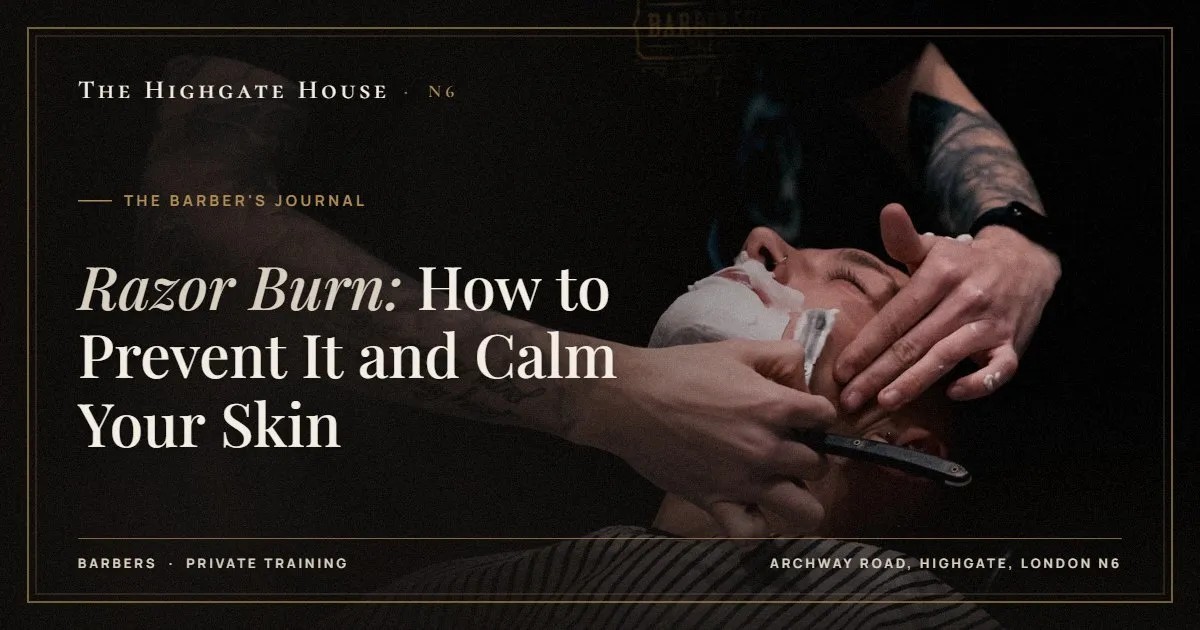
Razor Burn: How to Prevent It and Calm Your Skin
Razor burn is surface irritation from the blade: redness, stinging and a hot, tight feeling that appears within minutes or hours of shaving and usually settles in a day or two. It comes from friction and from scraping away too much of the skin’s outer layer, so prevention is about reducing both: a sharp blade, proper lubrication, fewer passes, light pressure and shaving with the grain on sensitive areas such as the neck. If your skin is already burning, rinse with cool water, pat it dry, apply a fragrance-free moisturiser or balm, and leave it alone, including no shaving, until it has calmed.
Razor burn, razor bumps and ingrown hairs are not the same
Men often use these terms interchangeably, but they have different causes, so they need slightly different fixes.
Problem | What it looks like | When it appears | Main cause |
|---|---|---|---|
Razor burn | Flat redness, stinging, rash-like | Minutes to hours after shaving | Friction and over-exfoliation by the blade |
Razor bumps | Small raised spots along the beard area | A day or more after | Hairs curling back into the skin, common with curly hair |
Ingrown hairs | Individual red or pus-filled spots, sometimes with a visible trapped hair | Days after | A hair growing under or back into the skin |
This post deals with razor burn. If your problem is mostly bumps or spots, see our guides on ingrown hairs after shaving and razor bumps on Black skin.
Why it happens
Every pass of a razor removes a thin layer of dead skin cells along with the hair. One careful pass is usually fine. Three or four passes over the same area, with a dull blade, thin lather and firm pressure, strips more than the skin can tolerate. The result is irritation, and on some skin, a visible rash.
The neck suffers most. The hair there often grows in several directions, the skin is thinner and moves more, and it is the area men tend to go over repeatedly to chase a clean line.
How to prevent it: changes ranked by impact
You do not need to change everything. Start at the top of this list; most men find the first three solve the problem.
Use a sharp blade. A dull blade drags and needs more pressure and more passes. If a blade tugs, change it. Cartridges generally last fewer shaves than the packaging implies, and a safety razor blade is cheap enough to change often.
Shave with the grain, at least on the neck. Going against the direction of growth gives a closer shave but cuts the hair below the surface and puts more stress on the skin. Map your growth first by running a hand over the stubble; it often changes direction on the neck. Our guide to shaving with the grain shows how.
Fewer passes, lighter pressure. Let the weight of the razor do the work. If you need a second pass, relather first; never go over dry skin.
Prepare the hair. Shave after a warm shower, or hold a warm, damp flannel on the beard for a minute or two. Softer hair needs less force to cut.
Use a proper lather. A shaving cream or soap worked into a lather cushions the blade better than a thin gel or plain soap. Give it a minute on the skin before you start.
Rinse the blade often so hair and lather do not clog it.
Skip alcohol-heavy aftershave if you are prone to burn. A fragrance-free balm is kinder.
Does the razor type matter?
It can. Multi-blade cartridges cut close in a single stroke, which suits some skin and irritates others, because each blade is another scrape. Single-blade safety razors take a little practice but put less total contact on the skin. Electric shavers do not cut as close and are often the gentlest option for men whose skin reacts to every wet shave. None is right for everyone; if you keep getting burn with one type, trying another is a sensible experiment.
If your skin is already burning: the first hour
Rinse with cool water to take the heat out.
Pat dry with a clean towel. Do not rub.
Apply a fragrance-free moisturiser or aftershave balm. Plain is better than clever.
Avoid alcohol-based products, scented aftershave and anything with acids or retinoids on the area.
The next two days
Do not shave the area until the redness has gone. Shaving over irritated skin keeps the cycle going.
Keep moisturising morning and night.
Loosen tight collars if it is on your neck; the rubbing slows recovery.
If you must look tidy for work, use an electric trimmer to bring stubble down rather than a blade.
Most razor burn settles on its own within a few days. If the skin becomes increasingly painful, swollen, hot or develops pus-filled spots that spread, or if it does not improve after a week or two of gentler shaving, speak to a pharmacist or your GP. The British Association of Dermatologists' page on folliculitis describes when irritated hair follicles need treatment.
Habits that keep it coming back
Shaving first thing on waking, before the face has had warm water on it.
Dry shaving with a blade, even for a quick tidy.
Stretching the skin hard and pressing down at the same time.
Using a blade you have had in the shower for weeks.
Shaving every day when your skin would cope better with every other day.
What a barber’s shave does differently
A hot towel shave is often easier on the skin than a home shave because the preparation is longer and the barber is working with the grain using a fresh, sharp blade. Hot towels soften the hair, the lather is worked in properly, and the barber reads the growth direction on each part of your face and neck. It takes 20 to 30 minutes. At Highgate Cuts every visit starts with an assessment: the barber looks at your skin and hair and what you need, then makes recommendations, which may include a gentler approach on the neck if you are prone to burn. See our hot towel shaves and barber services for more, and for prices, see the barber menu or email us.
Questions we get asked
How long does razor burn last?
Usually a day or two, sometimes up to a few days if you keep shaving over it.
Is razor burn worse in winter?
Many men find it is, because cold air and central heating dry the skin. Moisturising daily helps.
Should I shave in the morning or evening to avoid it?
Evening shaving gives the skin overnight to recover before collars and cold air. If you shave in the morning, do it after the shower, not before.
Can a barber help if I get razor burn every time?
Yes. A barber can show you how your hair grows and which direction to shave each area. Book a hot towel shave with our Highgate barbers on the ground floor of The Highgate House, Archway Road, and ask while you are in the chair.
Book with The Highgate House
Ready for a proper cut? Email us at [email protected] with the service and the day that suits you, and we will come back to you with times.
Visit The Highgate House · The barbers
The Highgate House, Archway Road, Highgate, London N6.
